Look for the flamenco.

Imagen relacionada


It is a Spanish musical genre of origin in Andalusia and also in areas of Extremadura and the Region of Murcia. Its main facets are singing, playing and dancing, also counting on its own traditions and norms.

Sing.

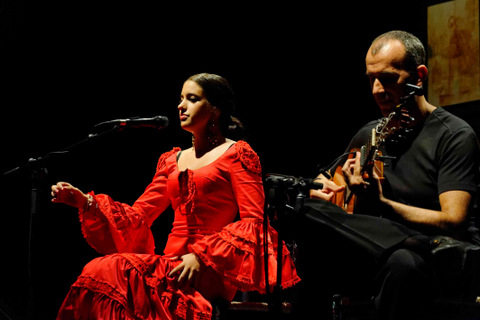
According to the Royal Spanish Academy, «cante» is the «action or effect of singing any Andalusian song», defining «flamenco cante» as «the agitated Andalusian song» and cante jondo as «the most authentic Andalusian song, of deep feeling. «
Resultado de imagen de cante flamenco


Touch.

The posture and technique of flamenco guitarists, called touches, differs from that used by classical guitar players. Meanwhile, the classical guitarist supports the guitar on his left leg in an inclined way, the flamenco guitarist usually crosses his legs and leaning on what is higher, placing the mast in an almost horizontal position with respect to the ground. Modern touches usually use classical guitars.

Resultado de imagen de toque flamenco


Dance.

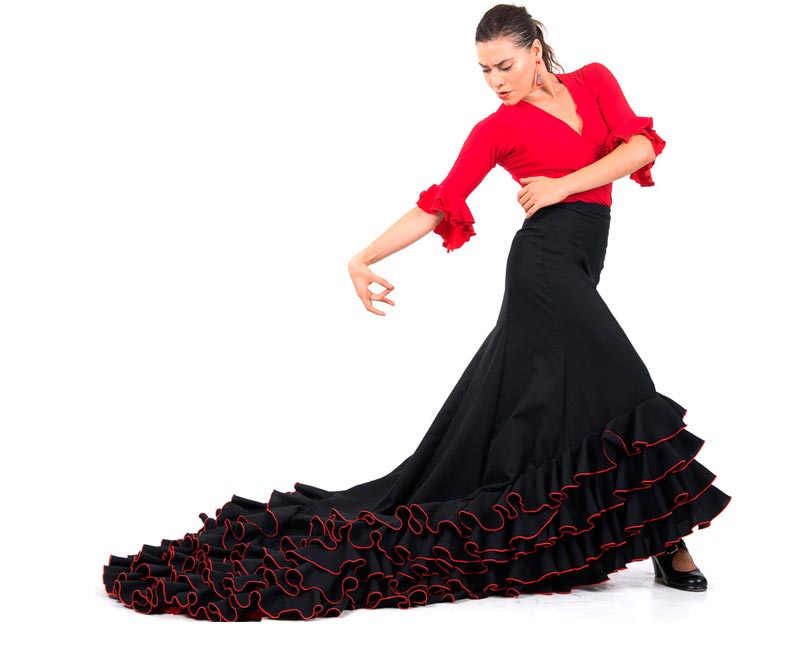
Flamenco dancing can accompany the clubs. Its performance is similar to moderate physical exercise, 49 and has proven effects on physical and emotional health (called «flamencotherapy»).

Resultado de imagen de baile flamenco


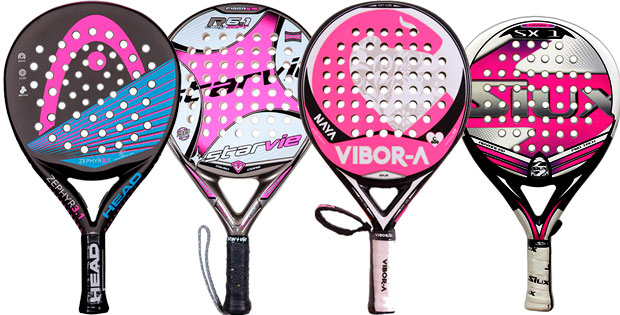
Feel the paddle.

Resultado de imagen de padel

It is a racket sport of Mexican origin. It is played in pairs and consists of three fundamental elements for its development: the ball, the shovel and the playing field or court. It has well-defined rules and is represented by different federations and associations.

Enclosures

The track is closed on its inner perimeter by funds of ten meters and sides of twenty meters. In all enclosures, areas built with materials that allow a regular bounce of the ball and areas of metal mesh where the bounce is irregular are combined.

Resultado de imagen de cerramientos de padel

Money.

They must be four meters high and can be wall, glass or plastic. It is admitted that the first three meters counted from the ground are of one of the specified materials and that the last one is metal mesh.

The paddle ball.

The official balls will be only those approved and approved by the different national federations. As established by the Regulations of the Spanish Paddle Federation, «the ball must be a rubber sphere with a uniform green or yellow outer surface. Its diameter should measure between 6.32 and 6.77 cm and its weight will be between 56.0 and 59.4 g. It should have a bounce between 135 and 145 cm when dropped on a hard surface from 2.54 m. The ball must have an internal pressure of between 4,6 kg and 5,2 kg per 2,54 cm². «

Resultado de imagen de pelotas de padel

The paddle’s shovel.

It will be played with the regulation paddle of paddle, according to homologation of the Spanish Paddle Federation (FEP). The maximum measurements of it are 45.5 centimeters long, 26 centimeters wide and 38 millimeters thick profile.

The blade will be perforated by an unlimited number of holes of 9 to 13 mm in diameter each in the whole central area. In a maximum peripheral area of ​​4 cm measured from the outer edge of the blade, the holes may have another shape or size, as long as they do not affect the essence of the game.

The striking surface may be flat, smooth or rough, not exceeding 30 cm long and 26 cm wide.

Resultado de imagen de palas de padel

A little corner of our city

Resultado de imagen de CADIZ

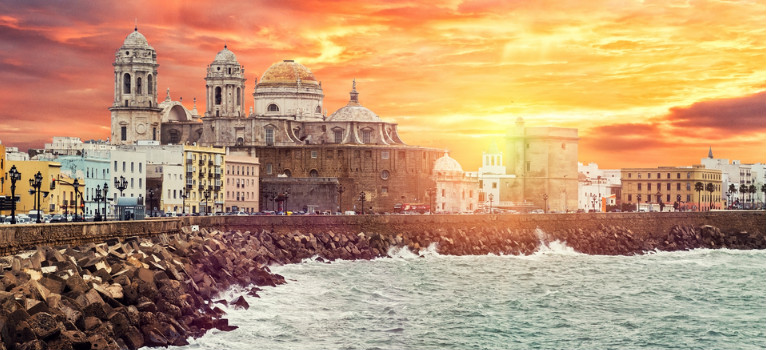
Cádiz is a city and municipality of Spain, capital of the homonymous province, in the autonomous community of Andalusia. With 116 979 inhabitants registered in 2018 (INE), it is the most populated city of the Bay of Cádiz and the third in the province after Jerez de la Frontera and Algeciras.

History.

The history of Cádiz is that of a city marked by its strategic military and commercial situation, halfway between the Atlantic Ocean and the Mediterranean Sea. It is one of the oldest Phoenician settlements in the West. Since its founding by the Tyrians, according to the classical tradition eighty years after the Trojan War (1104 a.C), it was a city devoted to the sea and commerce.

Imagen relacionada

Located

The city of Cádiz is located in what is called, geographically, a tómbolo.38 39 40 It is named like this when an island is joined to the continent by a very thin isthmus. In the particular case of Cádiz, this tombolo is not directly linked to the continent, but to what has been historically called the Island of León, where the city of San Fernando is located.